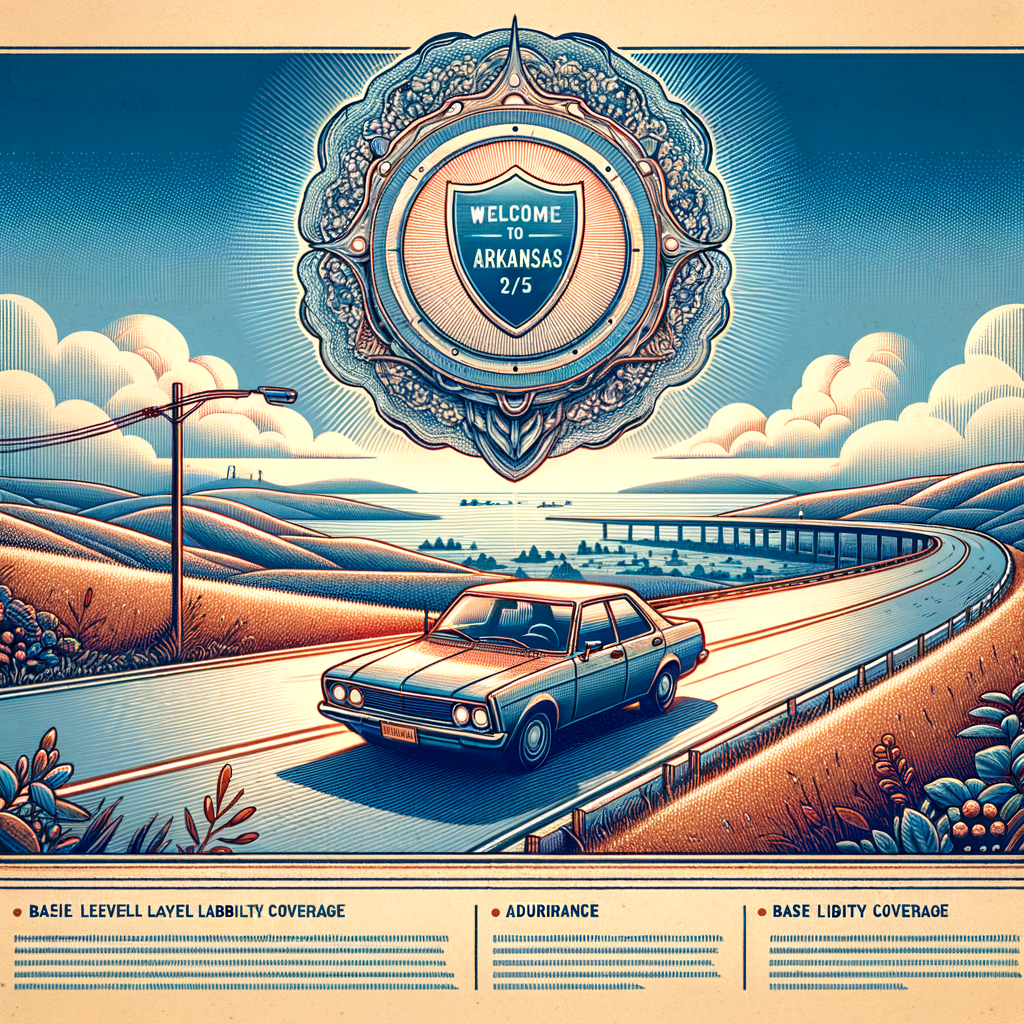
If you plan to drive in Arkansas, understanding the state’s minimum auto liability insurance requirements is essential. Like most states in the U.S., Arkansas has specific car insurance laws that all drivers must follow. These rules are to protect everyone on the road, ensuring that drivers can cover the costs of accidents if they happen. Let’s take a closer look at Arkansas’s minimum auto liability insurance requirements. Why these laws exist, and what happens if you drive without insurance.
Understanding Minimum Auto Liability Insurance in Arkansas
In Arkansas, every driver must carry a minimum amount of auto liability insurance. This type of insurance helps pay for bodily injury and property damage if you are at fault in a car accident. Specifically, the state mandates coverage of at least $25,000 per person for bodily injury, $50,000 per accident for total bodily injury, and $25,000 per accident for property damage. This combination is called 25/50/25 coverage.
Auto liability insurance protects not only the driver but also other people who may be injured or have their property damaged in a traffic accident. Without this coverage, accident victims could face severe financial burdens, and at-fault drivers could be responsible for paying these costs out of pocket. The state sets minimum coverage limits to ensure there is some financial protection after an accident.
It’s important to note that these are only the minimum requirements. Many drivers choose to purchase higher coverage amounts or add optional policies, such as collision or comprehensive insurance, for broader protection. However, carrying at least the minimum liability insurance is not optional in Arkansas—it’s the law.
Why is Arkansas’s minimum auto liability insurance required?
The primary reason Arkansas requires all drivers to carry auto liability insurance is public safety. When everyone on the road has insurance, it helps ensure that anyone injured in a car accident or whose property is damaged can receive compensation.
Another important reason for the insurance requirement is to encourage personal responsibility among drivers. Accidents can happen at any time, even to the most careful motorists. By mandating insurance, Arkansas ensures that each driver is prepared to handle the consequences of an unexpected mishap. This shared responsibility helps prevent uninsured drivers from shifting accident costs to others or the public at large.
Additionally, insurance requirements help foster a more stable insurance marketplace. When coverage is mandatory, insurance companies can better predict their risk pools and set fairer rates for everyone. It also helps law enforcement and legal systems by providing a clear standard for expectations.
Penalties for Driving Without Insurance in Arkansas
Driving without insurance in Arkansas is more than risky. It’s illegal and carries severe penalties. If caught operating a vehicle without the required minimum liability insurance, you can be fined anywhere from $50 o $250 for a first offense. The fines increase significantly with each subsequent offense. You could even face jail time or community service for repeated violations.
Beyond fines, driving without insurance can result in suspension of your vehicle’s registration and driver’s license. Getting these reinstated usually requires paying additional fees and providing proof of insurance.
The long-term consequences can also be costly. Having a conviction for driving without insurance on your record can cause your insurance premiums to skyrocket once you do purchase a policy. Ultimately, the risks and penalties far outweigh any perceived savings from not carrying insurance.
Conclusion
Auto liability insurance isn’t just a legal checkbox in Arkansas. It’s a fundamental part of responsible driving. By understanding the minimum insurance requirements, the reasons behind them, and the penalties for non-compliance, drivers can make informed choices and protect themselves and others on the road. Always make sure you have the proper coverage before you get behind the wheel in Arkansas.