education


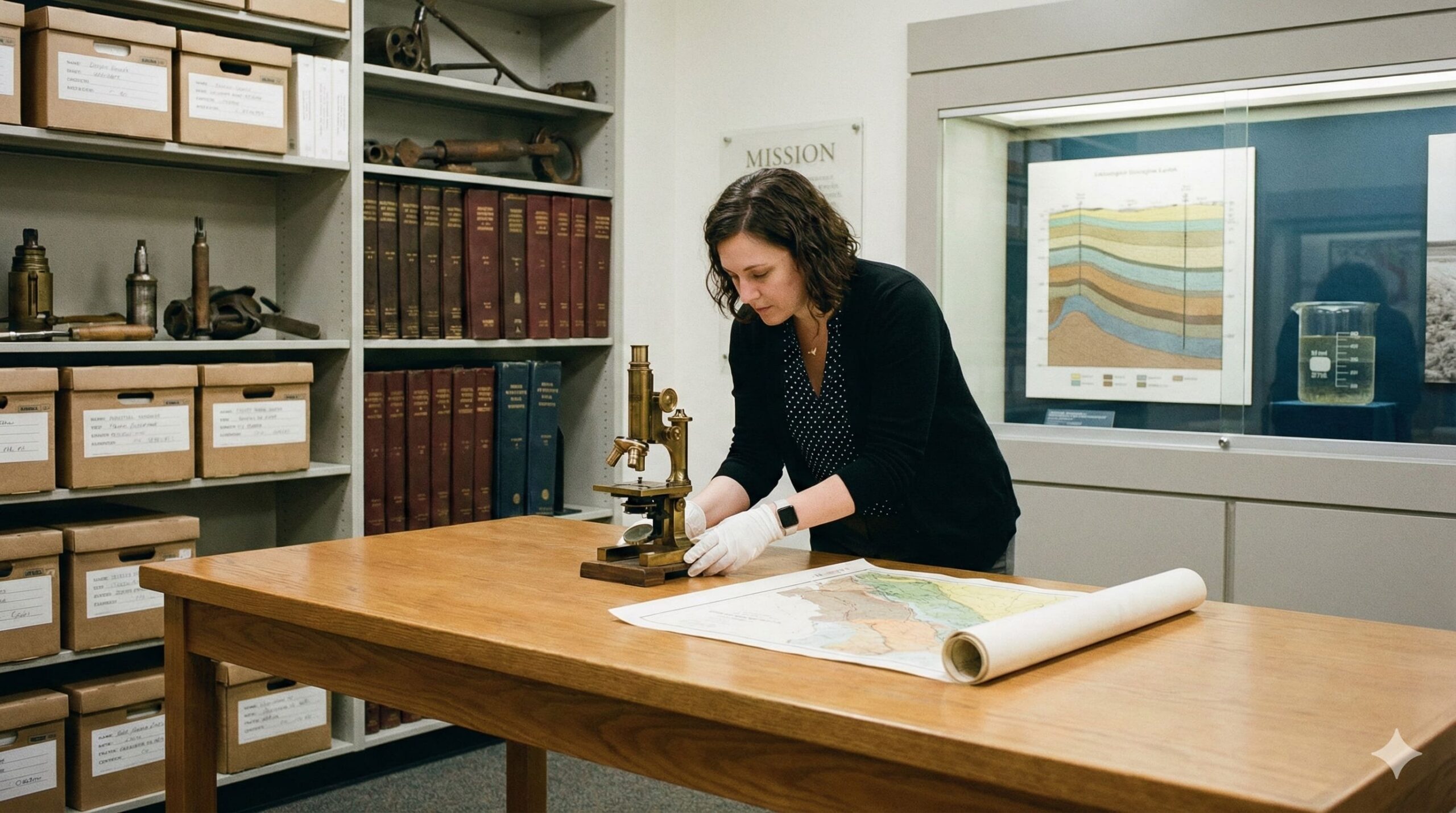
The Museum houses a large non-lending research library.  Contents include oil, geology, business, Arkansas history and considerable material relating to the south Arkansas oil boom.

Guided tours and educational programs are available year round and should be scheduled in advance. Educational programs are designed to provide interactive and interdisciplinary learning opportunities and are based upon current exhibits. Classroom visits are available upon request.

Contact Sherry Franques, Director of Education, to schedule tours and special programs.

(870) 725-2877, FAX (870) 725-2161, Email sherry.franques@arkansas.gov


THE WORLD AROUND US

K-2


GEOGRAPHY

      I.           Students will visit our earth globe and will be asked to recognize the United States and determine if there is more land    or water. (Where are there more oil wells?) Students will be asked to name the countries bordering the United States.

II.           Students will color a globe and mark their location as best as they can as well as North and South America.

III.          While in the earth globe students will be ask to locate and or name the 7 continents and four major oceans.

IV.         Students will identify Arkansas and learn some interesting facts about Arkansas.

V.          When touring Boom Town students will be asked to explain how this town is different from their town.

VI.         While in the café compare meals of then and now.

VII.        Using the pictures, have students describe what the people wore and how they kept it clean.

VIII.       Discuss the different jobs during the 1920’s and ask students for similarities of jobs today. How are they similar and how are they different.

IX.         While touring the Boom Town streets students will be told stories of how people traveled in the 1920’s.  With the use of the trucks, the Goat Woman’s wagon, and pictures on the street, explanation will be given how people traveled to and from Smackover. (how would you like to have to travel in these trucks, or wagons?)

X.          After visiting the tank on the Boom Town Street, students will be asked to explain what they saw. (Destruction of land by oil and saltwater.)


GOVERNMENT 1920’S STYLE


CIVICS

       I.       Explain to students that the jail was an important part of Smackover’s development. Discuss how crime was very

                prevalent and why a jail was needed also ask students to name reasons why people are put in jail today.

       II.      Tell the story of Clyde Byrd and express the difference in the job of a mayor today in comparison of the mayors’ job of the

               1920”s. The question will be asked of each student what part of government would they want to belong? (sheriff, mayor,

                deputy, etc.)


IS OIL REALLY MADE FROM DINOSAURS?


GEOLOGY

      I.              In the geology room students will be given a brief explanation of layering of the earths crust. Students will be questioned

                  as to which layers were formed first and last?

II.             This activity allows an open discussion of the different layers of the earth and where oil is found.  Children will hold and discuss shale, limestone and sandstone. Discussion of the problems drilling through such hard stone.

III.            This activity is a maze that allows students to drill for oil. Using their different layers to help search for the oil they will color the layers of earth or tear strips to glue as layers. This activity demonstrates the location and retrieval pattern of oil.

IV.          What are fossils?  Students will be shown several fossils and an explanation of these will follow with relations to oil discovery.  The student will then make a fossil of his hand print, using either clay or merely drawing it on paper.  We will date their fossils, and ask them to save them. ( a take home project)


A TOUCH OF 1920’s HISTORY


HISTORY

            I.       The history of the Oil Boom and a simple explanation. (Pictures of the Busey well, and the Richardson’s well will explain

                    how wells were drilled, and  their locations)

II.       Travel will be discussed with emphasis put on the time that it took getting from one location to another.  (Jobs  relating

        to transportation will be discussed at this point)

III.      Students will be told of the over-crowding situation and how scarce sleeping accommodations were.  Even places to live (tents, stumps etc.)

IV.     During the visit students will discuss natural resources and their importance.(emphasis on Oil and Bromine)

V.      Products of oil and bromine will be discussed in detail.

VI.     Students will recognize some of the famous people that came to Union County during the 1920’s.

VII.    Enlighten the students that Smackover and El Dorado are brimming with historical sites.

VIII.   Tell the story of the French trappers settling this area, and explain why people stayed here, touching and seeing real animal skins and furs.

IX.     Student activities will include, but are not limited to, coloring, puzzles, and mazes. Hands on activities on the Boom Town Street if applicable.

X.      Students will handle a cotton sack filled, to replicate working in the cotton fields.

XI.     Students will encounter the use of a cross-cut saw.

XII.   Students will be told the story of oil and how it naturally developed over time.


EVERYDAY USES OF OIL

             I.       A simple discussion of the uses of oil, after viewing objects made of oil, Students will explore different uses. The

                    activity that will be a coloring activity. ( the automobile is the largest consumer of fuel) Discuss the price of gasoline,

                    and see if some of the students know what we are doing to fix this.     

     II.       Students will be divided into two groups and ask to see which group can name the most things that are made form oil with a teacher and/or tour guide recording their answers. The group with the most answers will be the winners.


FUN IN THE SUN


OUTSIDE EXHIBIT

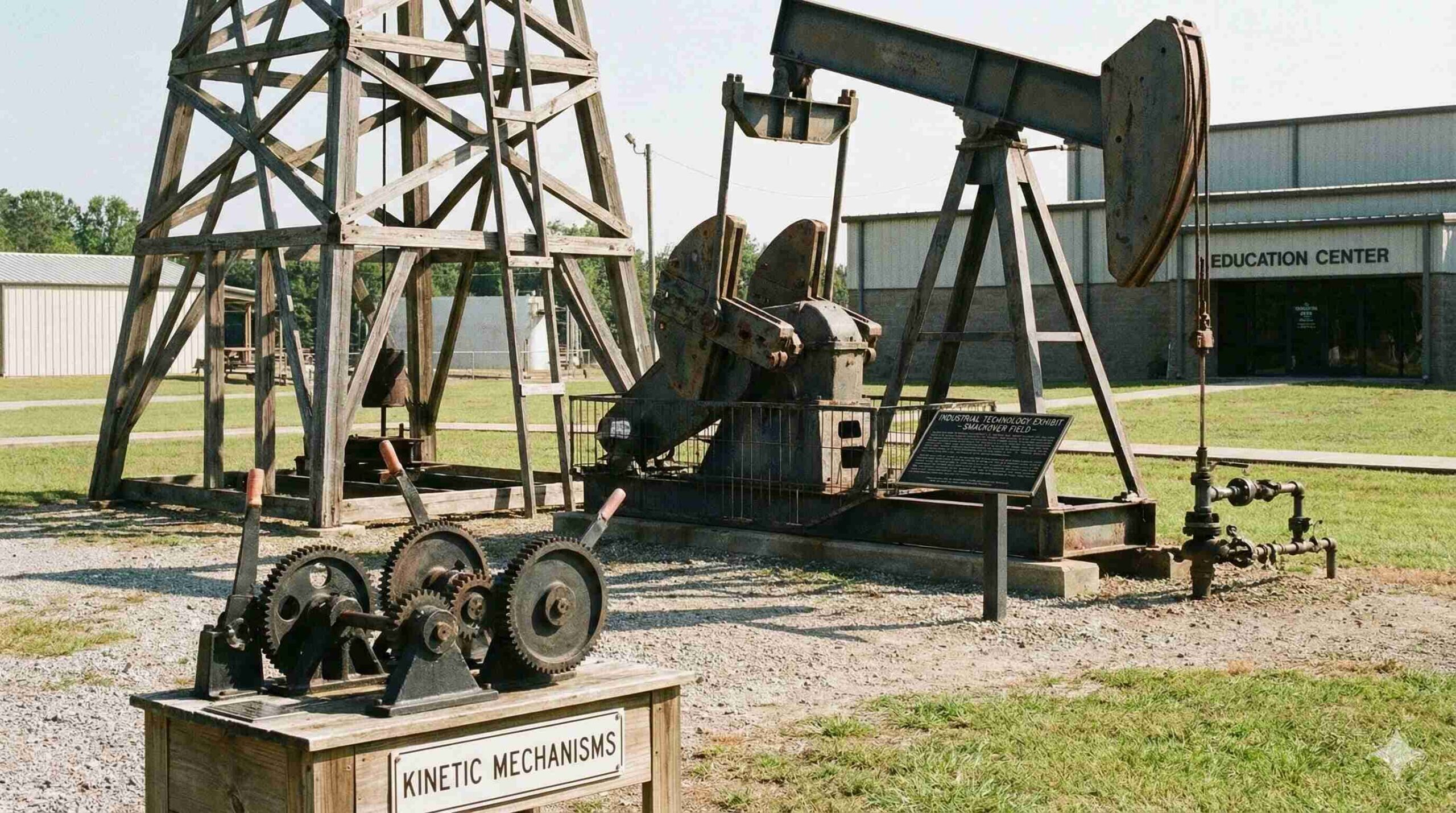
            I.                Students will discuss the three different types of derricks and decide why each change was an improvement. 

            II.               Trees and timber will be discussed and children will trace leaves or bark.

            III.              Students will build a central power station with their bodies. Like a see saw.


A NEW ANGLE ON DERRICKS


MATH OUTSIDE

            I.              Students will tell us the difference in the round pipe derrick and the angle iron derrick.  Will the students notice the

                         difference in pipe and angle iron derrick.

     II.             Students will draw circles and angles. Then they will draw a derrick or even build one with pipe cleaners or Popsicle

                 sticks.


FRAMEWORKS FOR THESE PROGRAMS


STRAND: GEOGRAPHY

     STANDARD 1: PHYSICAL AND SPATIAL


LOCATION, PLACE, AND REGION

G1.K.4 Recognize the United States in the Earth Globe

G.1.1.3 Identify and locate the United States in the Earth Globe

G.1.2.4 Identify and locate countries bordering the United States

G.1.k.5 Identify land on maps and Earth globe

G.1.1.5 Recognize that there are seven major continents

G.1.2.6 Locate the seven continents using the Earth Globe

G.1.1.6 Recognize that there are four major oceans in the world

G.1.2.7 Name and locate the four major oceans


STRAND: ECONOMICS

     STANDARD 8: RESOURCES


FACTORS OF PRODUCTION

E.8.K.4 Discuss natural resources

E.8.1.4 Identify uses of natural resources

E.8.2.3 Discuss the availability of natural resources


THE WORLD AROUND US


GRADE 3-4

GEOGRAPHY:

            I.        Students will view the earth globe and locate all 7 continents and determine if there is more water or land available.

II.       The use of a color sheets will enable students to identify 7 continents and locations of most of the oil locations.

III.       Explain the difference between continent and country using earth globe.

IV.     The students will locate several countries in each of the four hemispheres using the Earth Globe as a guide.

V.      Ask students to locate the Nile River, and the Dead Sea. Where are each of these located?

VI.     Student will discuss different modes of transportation used in the 1920’s.

VII.    Having been told the story of the settlement of Smackover, students will be asked to explain why French trapper

         settled in this area.  They will be asked to describe some of the animals that were needed to survive. Students will

         then see, touch actual animal skins and furs.

  The students will be asked to comment on how they would have liked working in the oilfield during the 1920’s in Arkansas.


ROCK-ON WITH GEOLOGY


GEOLOGY

I.     Students will view core samples, and see the layers of the earth from deep in the earth, to crust of earth.  Activity will include actually feeling shale, sandstone and limestone and discussing how and where they are formed. A discussion of sedimentary rock, metamorphic rock and igneous rock will follow.

II.     The students will work on a maze locating oil through the layers of the earth; a discussion will follow on the locations and layers of oil.

III.     A comparison of core samples and how the hydrocarbons are different. A discussion of the difference in diamond formation and oil formation.

IV.   Students will be shown fossils and ask to discuss them.

V.    Students will make a fossil to take home with them.

VI.   After viewing the elevator students will be aware of the origin of oil. Students will be ask to color diatoms and discuss what they are.

VII.   Discuss the natural divisions of Arkansas.  A map will be given to each child and they will label the locations of each division and where they live.

VIII.  Each student will distinguish among Earth’s materials: (rocks, minerals, fossils and soils)

IX.               

X.     Students will become aware that Arkansas is the only state that has diamonds and quarts crystal of high definition that are found naturally in certain areas of Arkansas. Why are these found in these areas? Specifically where are they found?


LITTLE BIT OF THEN AND NOW


HISTORY

            I.          Students will be asked to tell how people in the world, state and local levels have changed over time.

II.         A comparison of tools used in the 1920’s and present day will be noted, and students must express what the difference is in the two. On Boomtown street students will actually use some actual tools used during the 1920’s.

III.           Students will be asked to write a newspaper headline after touring the Boomtown Street.

IV.          Discussions of jobs, energy use, attire, transportation and tools. (In        

            detail using ideas they have received during the tour.)      

V.           Activity, have students measure the height of the flames of the oil well 

             using the width of their hands to determine the height of the fire.

VI.          An open discussion of how Bromine is used today with and activity listing uses. Students can see actual examples of bromine uses.

VII.         Students will have a short scavenger hunt on Bromine.

VIII.        Students will use a scavenger hunt to locate famous people and places found in Arkansas.

IX.          Students will examine the artifacts of times past and relate each to a period in time.

X.           Students will become aware of the impact of using natural resources on our region as well as the world.

XI.          Students will be able to identify between renewable and non-renewable resources.

XII.         We will discuss the impact of Arkansas’ natural resources on the economy, including but not limited to farming, timber, oil and bromine.

XIII.        Students will actually be able to feel a cotton sack, feeling the weight of it and how it was used in the early twenties.

XIV.      Students will use a crosscut saw, so they can recognize the amount of effort that went into cutting a tree.  The timber industry will be discussed.

XV.       A train lantern will be used by the students to symbolize the use of simple tools during early locomotion days.

XVI.      Students will get to harness a mule to actually see the difficulty that went into getting a mule-team ready for work.

XVII.     Students will get to wash clothes with a wash board and hang them out on a line. Experiencing the inconvenience of the times.


WHAT'S IN A BARREL OF OIL

            I.                Students will make a list of every thing they think is made of oil.

II.               Discuss the difference in renewable and non-renewable resources.

III.              Students will have a list of resources and they will have to circle the renewable and underline the non-renewable.

IV.         Students will be given a word search of the renewable and non-renewable resources.          

V.             Students will determine products that are made with renewable and non-renewable resources by drawing a line to each picture.

VI.            Students will also be given a sheet with products and they must select only the bromine products.

VII.           Student will do a scavenger hunt using material discussed on boomtown street.


WHERE TECHNOLOGY AND NATURE MEET

            I.                 Students will compare each of the three derricks.(round, angle, rectangle)_

II.                Students will discuss the difference in technology.

III.               With pipe cleaners and or Popsicle sticks students will design a derrick or pumping unit.

IV.             Students will color or tear colored paper to describe layers of the earth to reach oil, also a maze.

V.               Using plastic trees and sand demonstrate erosion.

VI.              Discuss destruction of the environment and natural habitat made by the Oil Boom.


FUELESS AND STATE PARK VIDEO.


FRAMEWORKS FOR PROGRAMS


STRAND: GEOGRAPHY

STANDARD 1: PHYSICAL AND SPATIAL

Students shall develop an understanding of the physical and spatial characteristic.

LOCATION, PLACE AND REGION

G.1.4.1 Discuss the difference between relative and absolute location

G.1.3.4 Identify on which continent and in which hemispheres the United States is located.

G.1.3.5 Identify the following using a globe

                        * Equator

                        * North Pole

                        * South Pole

G.1.4.5.Locate several countries in each of the four hemispheres

G.1.3.7 Identify the seven continents

G.1.4.6 Explain the difference between a continent and a country


REGIONALISM AND NATIONALISM

H.6.3.2 Examine historical people and events of Arkansas


CONTINUITY AND CHANGE

H.6.3.8 Compare artifacts form events in various periods of history.

H.6.4.10 Examine artifacts relating to events in Arkansas History

H.6.3.9 Identify ways in which technology has changed the world

H.6.4.11 Discuss advances in technology


STRAND: ECONOMICS

STANDARD 7: CHOICES

            Students shall analyze the cost and benefits of making economic choices


COST AND BENEFITS

E.7.3.1 Determine that people make trade offs to get the most benefit from scarce resources

E.8.3.2 Recognize ways people become more skillful in the workplace


STRAND: ECONOMICS

STANDARD 8: RESOURCES


FACTORS OF PRODUCTION

E.8.3.3 Recognize the product associated with the natural resources from which it is created

E.8.4.3 Examine the impact of scarcity of natural resources on production decisions

E.8.3.4 Explain how capital resources are related to specific jobs

E.8.4.4 Analyze how capital resources are used to produce goods and services


STRAND 4: EARTH AND SPACE SCIENCE

STANDARD 8: EARTH SYSTEMS: STRUCTURE AND PROPERTIES


PROPERTIES OF THE EARTH

ESS.8.3.1 Distinguish among earth’s materials:

·        rocks

·        minerals

·        fossils

·        soil

ESS.8.3.2 Classify rocks by their properties, including but not limited to

·        size

·        shape

·        color

·        texture

·        patterns

ESS.8.3.3 Identify the three categories of rocks:

·        metamorphic

·        sedimentary

·        igneous

ESS.8.3.4 Identify the physical properties of minerals

·        hardness

·        color

·        luster

·        streak

ESS.8.3.5 Identify areas in Arkansas that are the main sources of the following minerals:

·        bauxite

·        quartz

·        diamond

·        bromine

ESS.8.3.6 Describe the layers of Earth

·        crust

·        mantle

·        inner core

·        outer core

ESS.8.3.7 Identify common uses of rocks and minerals

ESS.8.4.2 Analyze the impact of using natural resources

ESS.8.4.3 Differentiate between renewable and nonrenewable resources


5th and 6th

THE WORLD AROUND US


GEOGRAPHY:

     I.               Earth globe discussion, locate and name the 7 continents.

II.              Give exact locations of Arkansas, Smackover and Israel ( the Dead Sea)

III.             Compare and contrast land forms and water locations. (seas, oceans)

IV.            Recognize the factors that influence migration to areas (Natural Resources)

V.             Students will be asked to explain the differences in renewable and non-renewable resources. (Name examples of

              each)

VI.            Students will be asked to analyze the consequences of environmental ramifications of specific areas of the United

              States. (Union County)

VII.           Define areas on earth globe locating the presence of oil.


TIME TRAVEL WITH GEOLOGY


GEOLOGY:

     I.           Using core samples emphasize the difference in earth’s layers.

     II.          Hands on with shale, sandstone, and limestone. Discuss sedimentary,   

                  metamorphic and igneous rock.

     III.         Discuss the layers of the earth using the core samples to demonstrate the differences in texture and appearance.

     IV.        Activity: Oceans of Oil-unscramble words (how oil is made)

     VIII.         Activity: Rock of Ages discusses fossils.  Have students make a fossil to   take home.

      IX.          Activity: With toilet paper students will determine the age of the earth. (using each square to represent 1 billion years).


WHO? WHAT? WHEN? AND WHERE?


HISTORY:

     I.                 Looking out over Boomtown imagine living in the 1920’s. (discussion)

II.                Activity: Boomtown Street: crossword puzzles.

III.               Discuss different jobs in the oil field: Activity: have students discuss what kind of job they would have done and why?

IV.             Activity: Roughnecks and Roustabouts make as many words from these two words as possible.

V.              Open discussion of the first oil wells in Smackover and El Dorado. 

VI.             Activity: Have the students compare the oil wells of Union County to those of Spindle Top.

VII.            Students will evaluate the reasons for the settling in this area.

VIII.          Students will be asked to explain some of the necessities needed for sustaining life.

IX.             Students will pretend they are early trappers, and suggest reasons for staying in this area.  Activities will include a

               lesson on the different pelts and skins of our area.

X.              Students will discuss how oil and bromine brought and kept people in this area.

XI.             Students will get to use some of the tools of the twenties.

XII.            Students will actually have to spend wages buying food and shelter.

XIII.           Students will be given a list of tools needed by a Wildcatter, and an amount of money to go buy these tools. 

XIV.          A cotton sack will have cotton and students will feel the heaviness and bulkiness of these bags and the amount of work

               that went into filling these bags.

XV.           Students will get to use a cross-cut saw, along with a discussion of the timber industry.

XVI.          Mule skinning was a big business during the twenties and the students will be able to rig –out a mule for a days work.

XVII.        Students will discuss why the price of gasoline has become such an issue.


BROMINE, OIL AND YOU

SCIENCE

     I.                 Students will compare fossils and give examples of how physical evidence from fossils supports the theory that Earth

                    has changed over time. 

II.                Activity: Oilfield Wordsearch

III.               Activity: Arkansas Metals Wordsearch

IV.              Activity: Arkansas Natural resources crossword puzzle.

V.               Identify Minerals found in Arkansas Wordsearch

VI.              Bromine Brine and You, Activity: Crossword puzzle

VII.             Students will make a lists of all products made of oil.

VIII.            Discussion about refining of oil, Activity: maze Can you find the Way from the Refinery to the Gas Station?

IX.              Students will identify sedimentary, igneous, and metamorphic rocks.

X.               Students will discuss how we know that our environment in south Arkansas has changed.


JOURNALISM, ENGLISH

I.                  Students will keep a journal while touring and after tour.

II.                 Students will write a newspaper headline “My Life During the Boom”

AUDIO VISUALS ARE AVAILABLE: ORAL HISTORIES FROM PEOPLE THAT LIVED DURING THE 1920’S.

ALSO “FUELESS”


FRAMEWORKS FOR PROGRAMS


STRAND: GEOGRAPHY

            STANDARD 1: PHYSICAL AND SPATIAL

            Students shall develop and understanding of physical and spatial    characteristics and applications of geography.


LOCATION, PLACE, AND REGION

G.1.5.1 Classify locations as absolute or relative

G.1.6.1 Apply the proper usage of absolute and relative location

G.1.5.2 Identify and describe the region of the United States in which Arkansas is located.

G.1.6.2 Examine the location, place, and region of Arkansas and determine the characteristics of each.

G.1.6.3 Identify the countries on the continent of North America

G.1.5.4 Locate the major bodies of water that are related to the United States


STANDARD 3: INTERACTION OF PEOPLE AND THE ENVIRONMENT

            Students shall develop an understanding of the interactions between people and

            their environment.


MOVEMENT

G.3.5.1 Recognize factors that influence migration (natural resources)


HUMAN ENVIRONMENT INTERACTION

G.3.5.5 Identify renewable and nonrenewable resources (fossil fuels)

G.3.6.5 Describe the physical processes that produce renewable and nonrenewable

            resources.

G.3.6.7 Analyze the consequences of environmental modification on Arkansas and specific areas of the United States.


STRAND: HISTORY

            STANDARD 6: HISTORY

            Students shall analyze significant ideas, events, and people in world, national, state and local history and how they affect change over time.


CONTINUITY AND CHANGE

H.6.5.2 Read and interpret timelines using specific terms

H.6.6.2 Create/construct timelines using specific terms

H.6.6.5 Research early 20th century inventions and their impact on Americans

H.6.6.6 Explain the impact of the American industrial revolution

H.6.5.7 Analyze the impact of the American industrial Revolution:

            * Cotton gin

            * Reaper

            * Steam engine

H.6.6.7Analyze the impact of World War I on daily life in the United States


STRAND: ECONOMICS

              STANDARD 7: CHOICES

            Students shall analyze the cost and benefits of making economic choices.


COST AND BENEFITS

E.7.5.2 Recognize that choices have both present and future consequences

E.7.6.2 Demonstrate an understanding that choices have both present and future consequences.

E.7.5.3 Identify the causes of scarcity and why scarcity of resources makes it necessary to make choices

E.7.5.5 Identify why federal, state and local governments have to make choices because of limited resources

E.7.5.6 Examine the economic decisions that every society must make


STRAND: ECONOMICS

            STANDARD 8: RESOURCES

            Students shall evaluate the use and allocation of  human, natural, and capital resources.


FACTORS OF PRODUCTION

E.8.5.4 Examine the need for natural resources in determining settlement patterns.

E.8.6.4 Evaluate the influences the discovery of natural resources has on the movement of people. (oil boom)


STRAND: ECONOMICS

            STANDARD 9: MARKETS

            Students shall analyze the exchange of goods and services and the roles of governments, businesses and individuals in the market place


GLOBAL MARKETS

E.9.5.8 Identify the costs/benefits associated with development of global trade


GOODS AND SERVICES

E.9.5.10 Identify how change in supply and demand affect prices.

E.9.6.10 Examine changes in supply and demand and the resulting effect on prices


STRAND 1: NATURE OF SCIENCE

            STANDARD 1: CHARACTERISTICS AND PROCESSES OF SCIENCE

            Students shall demonstrate and apply knowledge of the characteristics and processes of science using appropriate safety procedures, equipment, and technology.


PROCESSES OF SCIENCE

NS.1.5.4 Interpret scientific data using, charts, bar graphs, line graphs

NS.1.6.4 Construct and interpret scientific data using charts, line and bar graphs


STRAND 4: EARTH AND SPACE SCIENCE

            STANDARD 8: EARTH SYSTEMS

            Students shall demonstrate and apply knowledge of Earth’s structure and properties using appropriate safety procedures, equipment, and technology.


STRUCTURE AND PROPERTIES

ESS.8.5.1 Identify some basic elements composing minerals:

·        sodium

·        chlorine

ESS.8.6.1 Identify and diagram the layers of the Earth:

·        crust

·        mantle

·        inner and outer core

ESS.8.5.3 Identify characteristics of minerals

ESS.8.6.2 model layers of the earth

ESS.8.5.5 Identify the following minerals

·        diamonds

ESS.8.5.6 Identify minerals found in Arkansas

·        bauxite

·        diamonds

·        quartz

·        galena

ESS.8.5.7 Identify characteristics of sedimentary, igneous, and metamorphic rocks

ESS.8.5.8 Compare and contrast by investigation characteristics of three basic types of rocks:

·        Igneous

·        Metamorphic

·        Sedimentary

ESS.8.5.10 Classify the three basic types of rocks


EARTHS HISTORY

ESS.9.5.1 Explain and give examples of how physical evidence from fossils supports the theory that Earth has changed over time.

ESS.9.6.1 Research methods of determining geologic time

ESS.9.5.2 Analyze fossil record evidence about plants and animals that lived long ago

ESS.9.6.2 Model rock layer sequencing based on characteristics of fossils

ESS.9.5.3 Infer the nature of ancient environments based on fossil record evidence

ESS.9.6.3 Analyze evidence that supports the theory of plate tectonics